Denim
A warp-faced cotton twill with indigo on the surface and white beneath — the reason denim ages the way nothing else does.
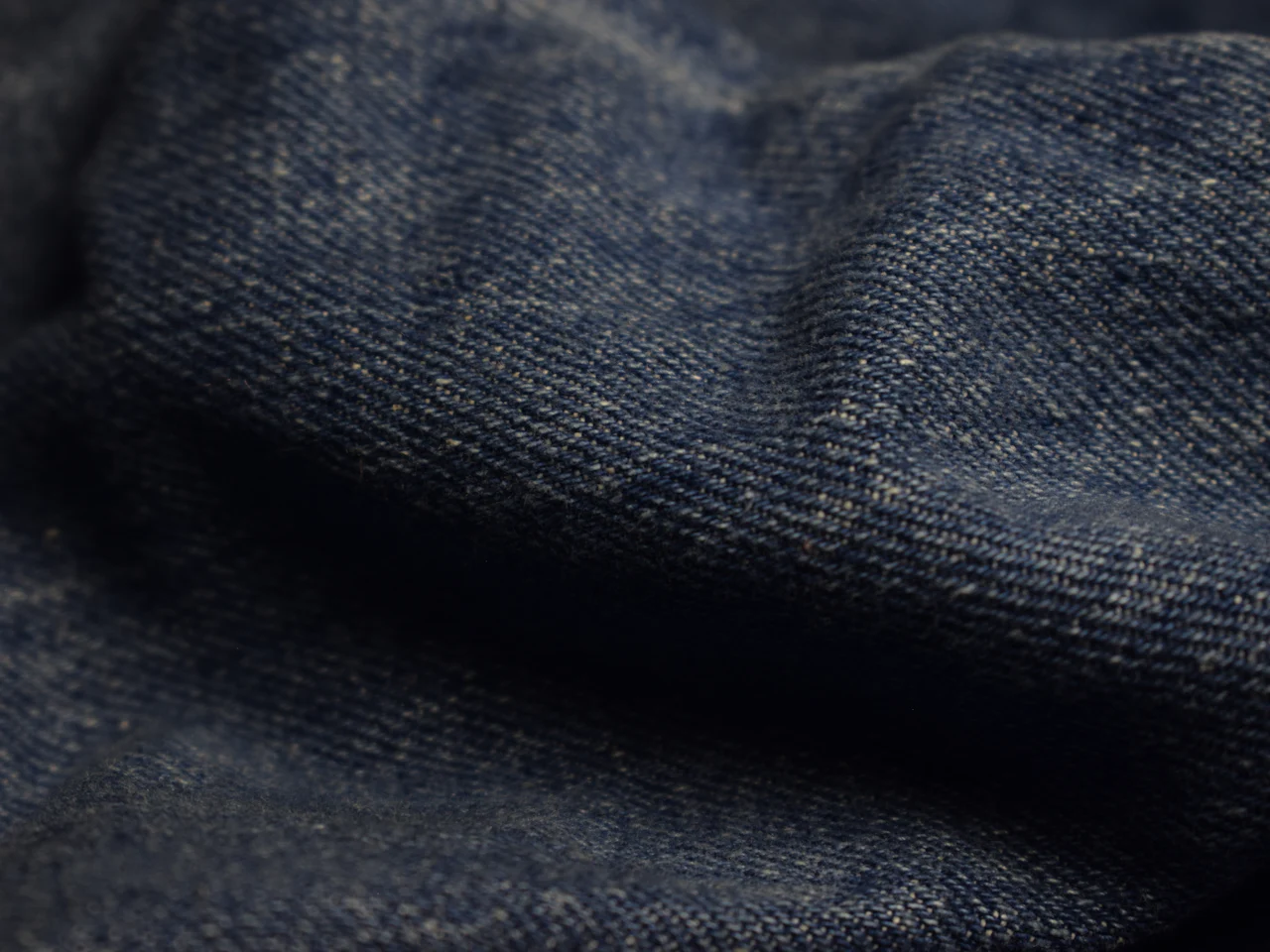
Denim is defined by its construction, not its colour. It is a warp-faced twill in which the warp yarns are dyed — traditionally with indigo — and the weft is left undyed. Indigo is a ring dye: it sits on the outside of the yarn rather than penetrating it. As the surface abrades through wear, the white core is progressively exposed, which is precisely why denim fades along seams, pockets and knees in a way that reads as character rather than damage.
Weight is quoted in ounces per square yard and drives the entire application. Lightweight denim from 6 to 8 oz behaves like shirting and suits shirts and dresses. The 10 to 12 oz range is the mainstream for jeans, balancing structure against comfort. Above 13 oz denim becomes rigid and demanding to sew, and is chosen deliberately for raw denim programmes where the wearer breaks the garment in slowly.
Elastane changed the category commercially. Two to three percent transforms fit and recovery for modern silhouettes, but it also changes the wash and the way the garment relaxes through the day. Raw versus washed is a separate decision again: raw denim ships stiff and untreated for the customer to break in, while washed denim arrives with its shrinkage and much of its character already resolved.
Fabric Types
Recommended Applications
Production Notes
- Raw denim shrinks substantially on first wash — pattern allowances must reflect the intended wash.
- Indigo crocking transfers onto light garments and upholstery; state this in care information.
- Heavy denim needs the right needle and thread; skipped stitches on 14 oz are a machine setup issue, not a fabric fault.
Request a Quote
Share the specification you are working to and our team will help you evaluate the right fabric options.