Performance & Technical
Fabrics specified by what they must withstand — measured properties rather than appearance.
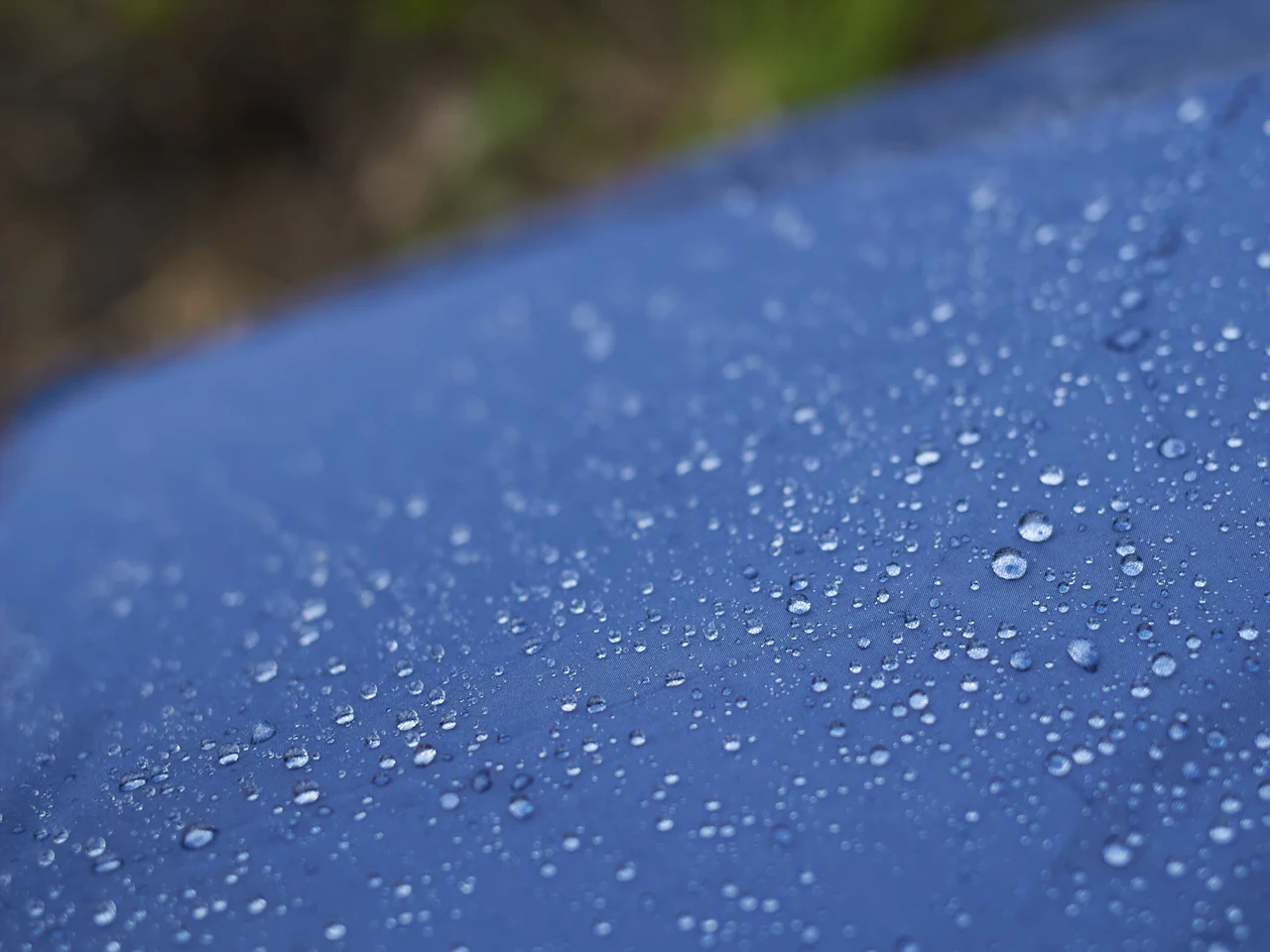
Technical fabrics are bought against requirements, not against a mood board. The buyer starts from the condition the garment must survive — rain, wind, abrasion, repeated industrial laundering, a full working shift of movement — and the cloth is specified backwards from there. That is why this category is described in measurable terms: hydrostatic head, abrasion cycles, tear strength, stretch and recovery percentages.
Water resistance illustrates the distinction that matters most commercially. A durable water-repellent finish causes water to bead on the surface and is suitable for showers, but it is a finish and it wears off with washing and abrasion. A coating or membrane is a barrier built into the fabric and performs at a different level entirely, with a corresponding difference in cost and breathability. Confusing the two produces returns, so it should be settled at quotation stage.
Workwear and outdoor constructions add durability requirements. Tightly woven cotton-polyester blends and high-tenacity yarns resist abrasion and tearing; reinforced weaves protect stress points. Where garments are industrially laundered — hospitality and healthcare in particular — the cloth must survive repeated high-temperature washing without losing colour, shape or finish, which rules out many fabrics that perform perfectly well domestically.
Fabric Types
Recommended Applications
Production Notes
- State whether a repellent finish or a coating is required — they are not interchangeable.
- Coated fabrics may need taped seams; a coated shell with open seams is not waterproof.
- For industrially laundered garments, confirm wash cycle and temperature before selecting cloth.
Request a Quote
Share the specification you are working to and our team will help you evaluate the right fabric options.