Tailoring
Cloth judged by what it does under heat, steam and an interlining — not by how it looks on a roll.
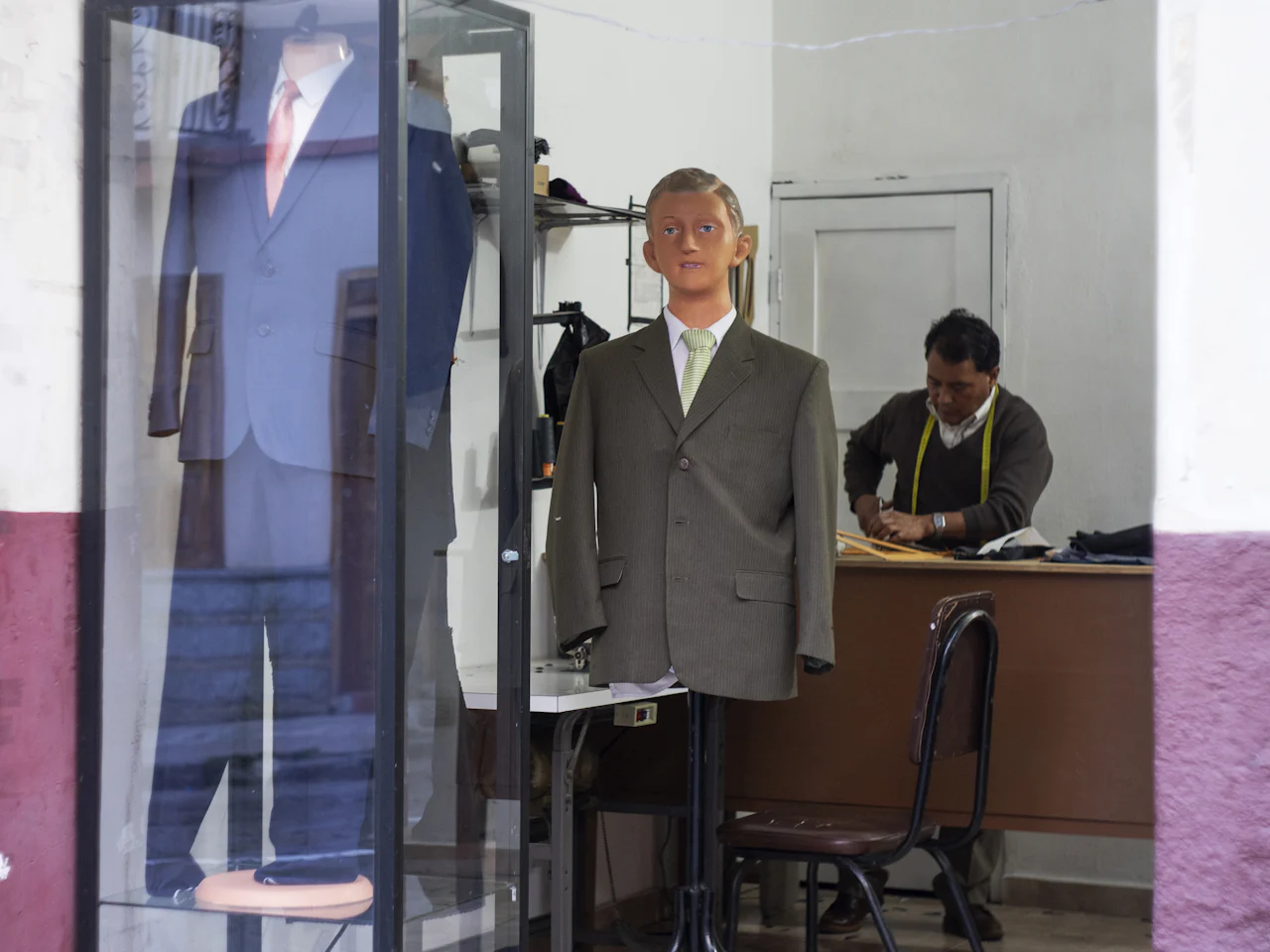
Tailoring production applies criteria no other category uses. The cloth must be mouldable with heat and moisture, hold a pressed edge, accept a fused or canvassed front, and recover from a day of wear. A fabric that photographs well and will not hold a press has no use in a tailoring factory.
Wool remains the reference because it does all of this naturally, while polyester viscose is the volume answer for uniform and corporate programmes. Stretch suiting has become mainstream for modern fits but moves under the iron, so shrinkage and pressing behaviour are confirmed on a sewn sample rather than a flat swatch.
What matters in this sector
- Press retention
- The ability to take and hold a pressed edge is the defining tailoring property.
- Shrinkage
- Confirmed before cutting; sponging is standard practice for a reason.
- Interlining compatibility
- A fusing mismatch shows first at the lapel roll.
- Weight by component
- Trouser cloth is often specified heavier than the matching jacket cloth.
Tell us what you are producing, in what quantity and to what delivery date. Our team will help you evaluate the fabric options that fit.